
Blog
What’s ABP-7 10mg and how’s it work
Jun
What’s ABP-7 10mg and how’s it work
What’s ABP-7 10mg and how’s it work. Peptides have become a growing area of interest in research and regenerative science, and one compound that has attracted attention is ABP-7 10mg. Although it is often discussed alongside recovery and repair-related peptides, ABP-7 remains an experimental research peptide and is not approved as a medical treatment for human use.
This article explains what ABP-7 is, how it is believed to work, and why researchers continue studying it.
What Is ABP-7 10mg?
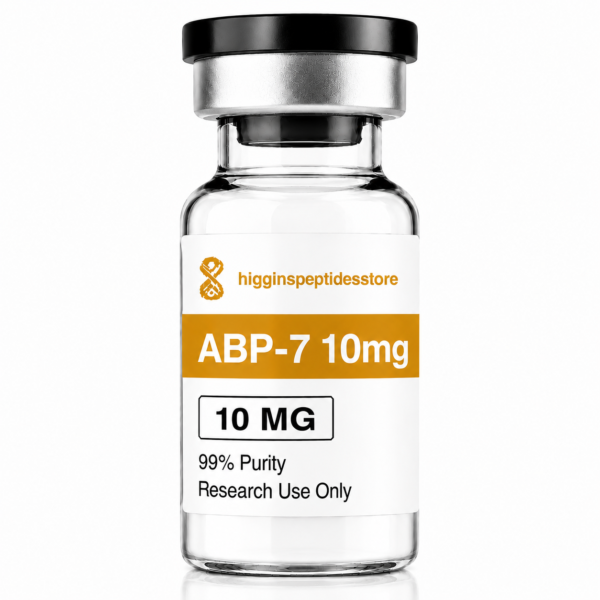
ABP-7 (Actin Binding Peptide-7) is a synthetic peptide composed of seven amino acids with the sequence Ac-LKKTETQ. It is considered a small active fragment derived from Thymosin Beta 4, a naturally occurring molecule involved in cellular organization and repair processes. Because of this relationship, ABP-7 is sometimes referred to as a TB-500 fragment.
The “10mg” label generally refers to the amount of peptide contained in a research vial and does not represent a recommended human dosage. Research suppliers commonly provide ABP-7 in a lyophilized (freeze-dried) powder form for laboratory use.
Understanding the Science Behind ABP-7
To understand ABP-7, it helps to know about actin.
Actin is one of the body’s most important structural proteins. It helps cells:
- Maintain shape
- Move across tissues
- Divide and reorganize
- Respond to injury
- Support internal cellular architecture
ABP-7 is studied because it appears to interact with this actin system. Researchers believe the peptide contains the core actin-binding region of Thymosin Beta-4.
How Does ABP-7 Work?
Current scientific understanding suggests that ABP-7 may influence the balance between two forms of actin inside cells:
- G-actin (globular actin) – free-floating actin units
- F-actin (filament actin) – structured actin fibers that form part of the cell skeleton
Research indicates ABP-7 may bind to G-actin and influence how it converts into F-actin. This process is sometimes described as actin sequestration.
By affecting this system, ABP-7 may theoretically support processes such as:
1. Cellular Movement
Cells often need to move during tissue maintenance and repair. Modifying actin behavior may help certain cells migrate more efficiently in experimental models.
2. Tissue Organization
Actin plays a major role in how cells organize themselves within tissues. Researchers are exploring whether ABP-7 changes structural signaling pathways involved in tissue remodeling.
3. Wound Repair Research
Some early laboratory and animal studies involving related Thymosin Beta-4 fragments observed effects associated with wound closure and tissue regeneration mechanisms.
4. Angiogenesis Investigation
Scientists have also explored whether ABP-7-related pathways influence angiogenesis—the formation of new blood vessels—which may play a role in repair processes. Evidence remains preclinical.
Why Researchers Are Interested in ABP-7
ABP-7 attracts attention because it represents a minimal active fragment rather than a larger, more complex peptide.
Potential research advantages include:
- Smaller molecular structure
- Easier laboratory synthesis
- Targeted biological investigation
- Ability to study specific actin-related pathways
Researchers use fragments like ABP-7 to isolate which portions of larger molecules may drive biological activity.
What Does Current Research Say?
At present, the evidence surrounding ABP-7 is still early-stage and preclinical.
Published interest largely comes from:
- Laboratory experiments
- Cell culture studies
- Animal research
- Investigations involving related Thymosin Beta-4 fragments
Importantly, there are no established large-scale human clinical trials demonstrating safety or effectiveness for therapeutic use under the name ABP-7.
Because of this, claims that ABP-7 can reliably improve healing, recovery, performance, or other health outcomes should be treated cautiously.
Is ABP-7 Approved for Medical Use?
Currently, ABP-7 is generally market and supplied as a research compound only.
Research suppliers commonly state that ABP-7 products are:
- Intended for laboratory use
- Not approved by regulatory authorities for treatment
- Not intended to diagnose, cure, or prevent disease
Final Thoughts
ABP-7 10mg is a synthetic seven–amino acid peptide derive from the actin-binding region of Thymosin Beta-4. Researchers are studying it because of its possible role in cell movement, structural signaling, tissue organization, and repair-related biological pathways.
While the science behind ABP-7 is interesting, the current evidence remains largely experimental and preclinical. More rigorous human research would be need before drawing conclusions about real-world medical applications.
