
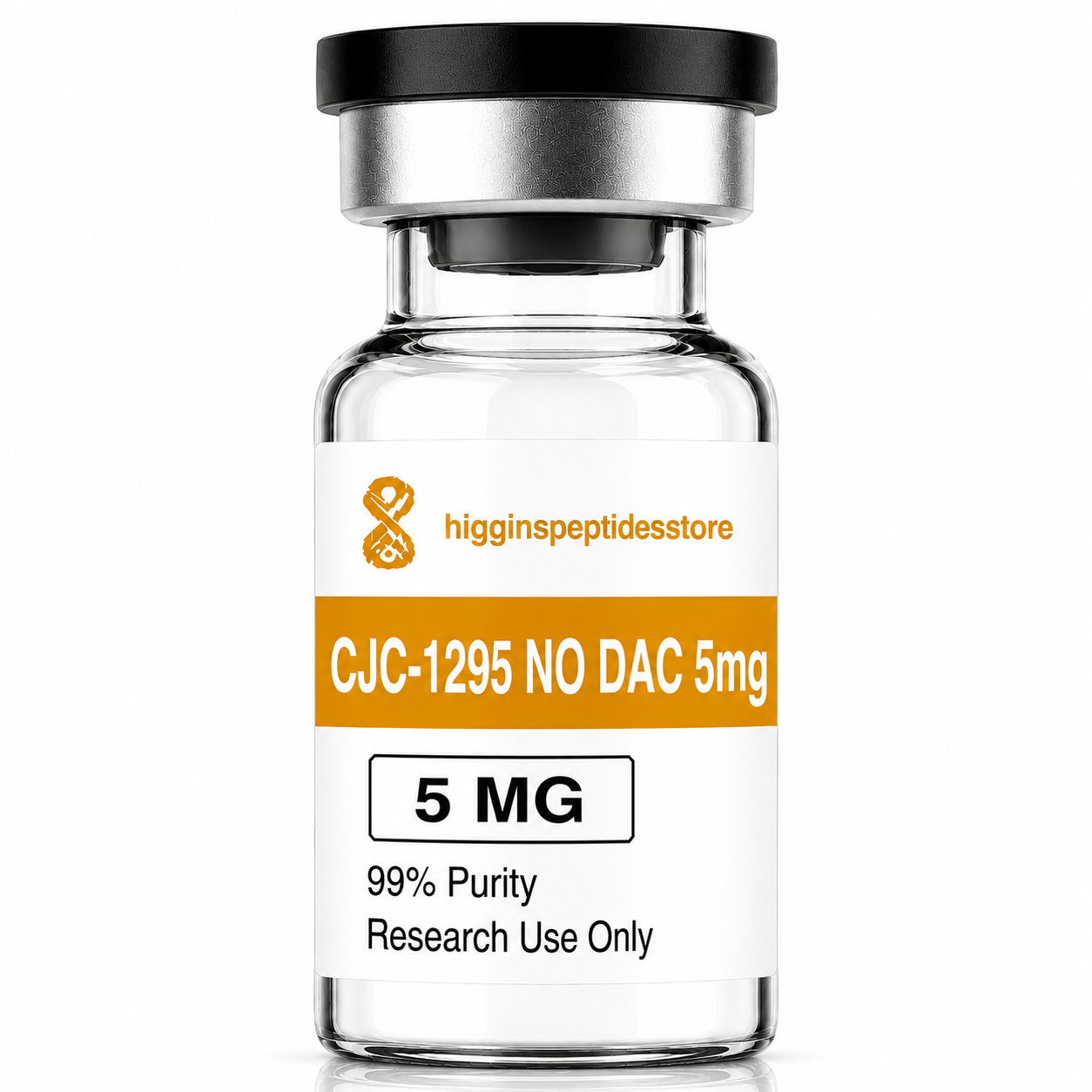


Buy CJC-1295 NO DAC 5mg Online
Buy CJC-1295 NO DAC 5mg Online is a synthetic peptide widely studied within endocrinology, peptide science, molecular biology, and growth hormone research. As a modified analogue of Growth Hormone-Releasing Hormone (GHRH), CJC-1295 NO DAC has attracted considerable scientific interest because of its ability to interact with growth hormone signalling pathways while maintaining a shorter duration of activity compared with DAC-modified versions.
Researchers continue investigating CJC-1295 NO DAC because it serves as an important tool for understanding endocrine communication systems, receptor-mediated signalling pathways, peptide biology, and physiological regulation mechanisms. Studies involving this peptide contribute valuable knowledge regarding hormonal communication, cellular coordination, and biological adaptation processes.
As peptide science continues advancing, CJC-1295 NO DAC remains a significant compound within laboratory research programs focused on growth hormone regulation and molecular signalling.
What Is CJC-1295 NO DAC?
CJC-1295 NO DAC is a synthetic Growth Hormone-Releasing Hormone analogue designed to mimic the biological activity of naturally occurring GHRH. Unlike the DAC (Drug Affinity Complex) version of CJC-1295, the NO DAC variant lacks the albumin-binding component responsible for extending circulation time.
Because it does not contain the Drug Affinity Complex, researchers often describe CJC-1295 NO DAC as a shorter-acting GHRH analogue that more closely resembles natural pulsatile hormone signalling patterns.
Scientists study this peptide to better understand:
- Growth hormone regulation pathways
- Endocrine communication networks
- Receptor activation mechanisms
- Signal transduction systems
- Hormonal coordination processes
- Peptide-mediated biological responses
Its unique structure has made it a commonly used compound within peptide and endocrine research.
Understanding Growth Hormone-Releasing Hormone
Growth Hormone-Releasing Hormone is a naturally occurring peptide produced primarily within the hypothalamus. It plays an essential role in regulating growth hormone secretion through communication with the anterior pituitary gland.
Researchers investigate GHRH signalling because it influences numerous biological systems, including:
- Hormonal communication pathways
- Endocrine regulation networks
- Cellular signalling systems
- Metabolic coordination processes
- Physiological adaptation mechanisms
- Molecular communication pathways
Synthetic analogues such as CJC-1295 NO DAC allow scientists to study these systems in controlled laboratory environments.
Why Researchers Study CJC-1295 NO DAC
Scientific interest in CJC-1295 NO DAC continues expanding due to its relevance to multiple research disciplines.
Researchers commonly investigate:
- Growth hormone signalling pathways
- Endocrine biology
- Molecular communication systems
- Receptor-mediated signaling
- Cellular regulation mechanisms
- Hormonal coordination networks
- Signal transduction pathways
- Peptide structure-function relationships
These investigations help scientists better understand how hormones and signalling molecules coordinate physiological functions throughout biological systems.
Mechanism of Action
CJC-1295 NO DAC primarily functions by interacting with Growth Hormone-Releasing Hormone receptors located within the pituitary gland.
Receptor Activation
Researchers study how the peptide binds to GHRH receptors and initiates intracellular signalling cascades. These signalling events contribute to broader investigations of endocrine communication networks.
Hormonal Communication
The peptide serves as a useful model for understanding how signalling molecules transmit information between different tissues and organs.
Cellular Signalling Pathways
Scientists continue investigating how activation of GHRH receptors influences downstream molecular pathways involved in cellular communication and biological regulation.
Physiological Coordination
Research involving CJC-1295 NO DAC contributes to understanding how endocrine systems coordinate responses across multiple biological networks.
CJC-1295 NO DAC vs. CJC-1295 DAC
One of the most commonly discussed topics in peptide science involves the distinction between CJC-1295 NO DAC and CJC-1295 DAC.
CJC-1295 NO DAC
Characteristics frequently studied include:
- Shorter duration of activity
- Absence of Drug Affinity Complex
- Closer resemblance to natural pulsatile signalling
- Frequent use in receptor-signalling studies
CJC-1295 DAC
Researchers describe DAC-modified versions as having:
- Extended circulation time
- Albumin-binding capability
- Longer-lasting biological activity
- Different pharmacokinetic properties
Comparative studies between these compounds help scientists understand how structural modifications influence peptide behaviour.
Research Applications of CJC-1295 NO DAC
Endocrinology Research
One of the primary applications of CJC-1295 NO DAC involves endocrine system investigations.
Researchers use the peptide to study:
- Hormone signalling mechanisms
- Pituitary communication pathways
- Endocrine regulation systems
- Hormonal feedback networks
These studies continue contributing to broader knowledge regarding endocrine biology.
Molecular Biology Studies
Scientists frequently incorporate CJC-1295 NO DAC into molecular biology programs focused on:
- Receptor interactions
- Signal transduction pathways
- Cellular communication systems
- Molecular regulation mechanisms
Understanding these interactions remains a major objective within modern biological science.
Peptide Science Research
The peptide serves as an important model for investigating:
- Structure-function relationships
- Receptor specificity
- Signaling efficiency
- Biological communication systems
Research findings help improve scientific understanding of peptide-mediated regulation.
Cellular Communication Investigations
Researchers continue exploring how endocrine signalling pathways influence communication between cells, tissues, and physiological systems.
These investigations provide valuable insights into biological organisation and coordination.
Growth Hormone Signalling Research
CJC-1295 NO DAC remains widely utilised in studies focused on growth hormone regulatory pathways and associated signalling networks.
Scientists continue examining how these pathways contribute to broader physiological regulation systems.
Importance in Modern Peptide Science
Modern peptide science increasingly focuses on understanding how signalling molecules coordinate biological processes.
Peptides function as highly specific messengers capable of influencing:
- Cellular communication
- Hormonal regulation
- Physiological adaptation
- Molecular coordination
- Signal transduction
CJC-1295 NO DAC has become a valuable research compound because it enables scientists to investigate these mechanisms under controlled laboratory conditions.
Its continued use contributes to expanding knowledge regarding endocrine communication systems and peptide-mediated biological regulation.
Growing Interest in Endocrine Research
Endocrinology remains one of the fastest-growing areas of biomedical research.
Scientists worldwide continue investigating:
- Hormone signalling networks
- Pituitary regulation mechanisms
- Cellular communication pathways
- Endocrine adaptation systems
- Molecular signalling biology
CJC-1295 NO DAC remains relevant within these investigations because of its established role as a GHRH analogue and research tool.
The growing volume of scientific literature surrounding peptide signalling demonstrates the increasing importance of this field.
Laboratory Handling and Storage
Research peptides require appropriate handling procedures to maintain stability and support reliable experimental outcomes.
Researchers generally follow established laboratory practices, including:
- Storage under recommended temperature conditions
- Protection from excessive moisture
- Avoidance of prolonged heat exposure
- Use of sterile laboratory techniques
- Accurate record keeping
- Compliance with laboratory safety protocols
Proper handling supports consistency and reproducibility throughout research programs.
Future Directions in CJC-1295 NO DAC Research
Future scientific investigations may continue exploring:
- Growth hormone signalling mechanisms
- Endocrine communication pathways
- Receptor biology
- Molecular regulation systems
- Cellular adaptation processes
- Peptide engineering technologies
- Hormonal coordination networks
As peptide science evolves, compounds such as CJC-1295 NO DAC are expected to remain important tools for understanding biological communication systems.
Conclusion
CJC-1295 NO DAC 5mg represents a significant research peptide within endocrinology, molecular biology, and peptide science. Its role as a Growth Hormone-Releasing Hormone analogue has made it a valuable compound for investigating endocrine communication systems, receptor signalling pathways, and molecular regulation mechanisms.
Through ongoing laboratory investigations, researchers continue expanding scientific understanding of hormonal signalling, cellular communication, and physiological coordination. These studies contribute valuable knowledge to the broader fields of peptide biology and endocrine research.
Research Disclaimer
CJC-1295 NO DAC 5mg is intended exclusively for laboratory and scientific research purposes. It is not approved for human consumption, medical treatment, therapeutic use, veterinary applications, or diagnostic purposes. Research should be conducted only by qualified professionals in accordance with applicable regulations, laboratory standards, and safety guidelines.
Be the first to review “Buy CJC-1295 NO DAC 5mg Online”
Related products


Peptides

Peptides
Peptides

Peptides

Peptides
Peptides
Reviews
There are no reviews yet.