
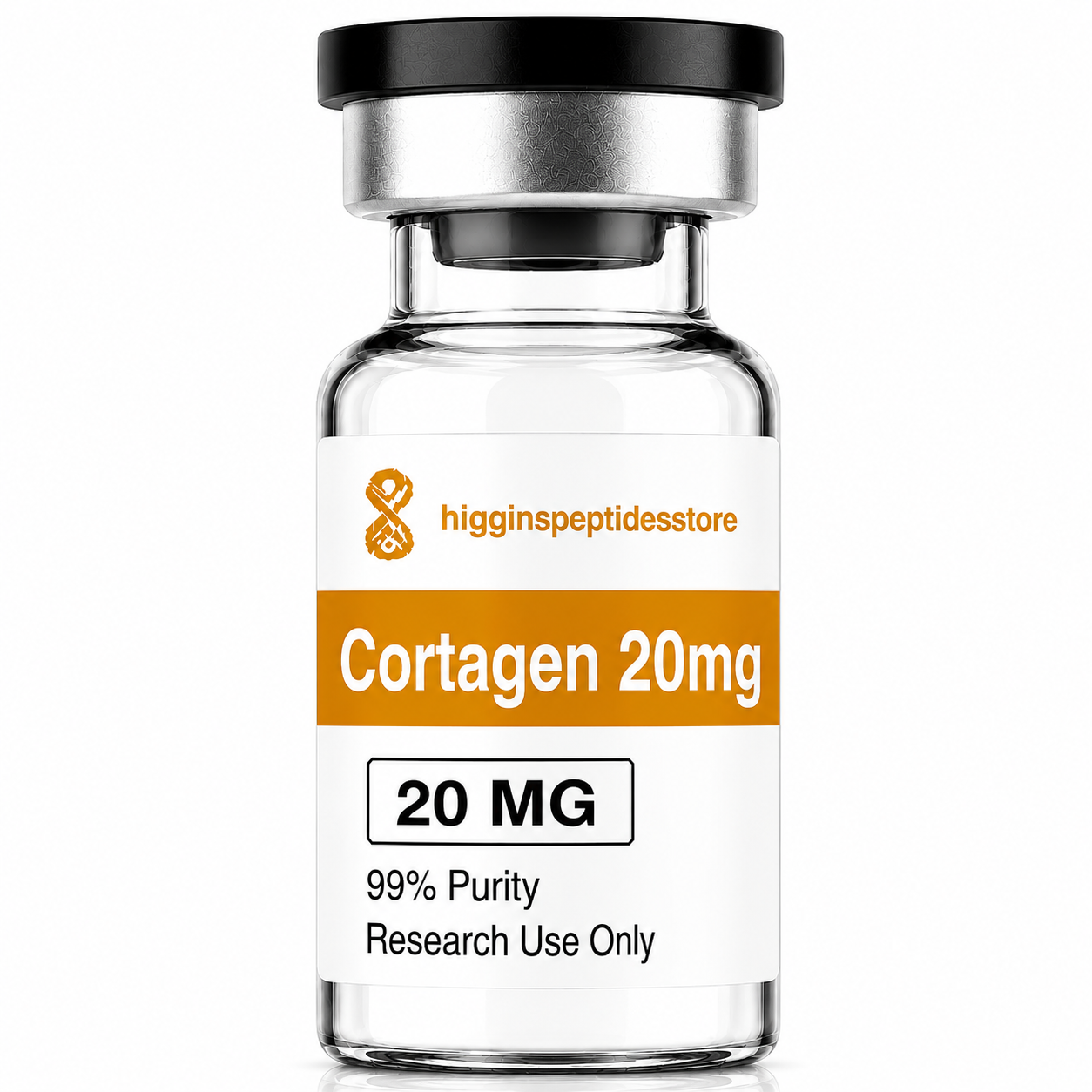
Buy Cortagen 20mg Online
Buy Cortagen 20mg Online is a synthetic tetrapeptide that has gained attention within peptide science, neuroscience, ageing research, and bioregulator peptide studies. Developed as part of the Khavinson peptide bioregulator program, Cortagen is composed of the amino acid sequence Ala-Glu-Asp-Pro (AEDP) and is primarily investigated for its relationship to cerebral cortex function and neuronal signalling pathways. Researchers continue studying Cortagen because of its potential role in cellular communication, gene-expression regulation, neurobiology, and age-related biological processes.
Within modern peptide research, Cortagen is often classified as a brain bioregulator peptide. Scientific investigations focus on understanding how short peptides influence cellular signalling systems, tissue-specific communication networks, and molecular regulatory pathways. As interest in peptide bioregulators continues expanding, Cortagen remains a frequently discussed compound in neuroscience and longevity research communities.
This article provides an educational overview of Cortagen, its scientific background, biological characteristics, and ongoing research applications.
What Is Cortagen?
Cortagen is a synthetic tetrapeptide consisting of four amino acids: alanine, glutamic acid, aspartic acid, and proline. It was developed within the Russian bioregulator research program led by Professor Vladimir Khavinson and is considered a synthetic analogue derived from studies involving Cortexin, a peptide preparation associated with cerebral cortex tissue. Researchers investigate Cortagen as a defined peptide sequence that may influence biological regulation systems within neural tissues.
Unlike larger protein molecules, Cortagen belongs to a category of ultra-short peptides known as bioregulators. These compounds are studied for their potential ability to participate in tissue-specific signalling and gene-expression modulation. The peptide is frequently investigated in relation to neuronal communication, neuroprotective mechanisms, and cerebral cortex biology.
Understanding Bioregulator Peptides
Bioregulator peptides represent a unique area of peptide science focused on short amino acid sequences that may influence cellular regulatory processes. Scientists study these compounds because they appear to interact with molecular pathways involved in tissue maintenance, cellular adaptation, and biological communication.
Researchers investigating bioregulator peptides often focus on:
- Cellular signalling systems
- Gene-expression regulation
- Tissue-specific communication
- Molecular adaptation mechanisms
- Ageing-related biological processes
- Cellular maintenance pathways
- Neurobiology and cognitive research
- Physiological coordination systems
Cortagen is one of several peptides within this family and is primarily associated with cerebral cortex research.
Why Researchers Study Cortagen
Scientific interest in Cortagen continues to grow because of its relationship to several active fields of research.
Researchers commonly investigate Cortagen in studies involving:
- Neuroscience
- Brain ageing research
- Cellular communication pathways
- Cognitive biology
- Neuroprotection studies
- Gene-expression mechanisms
- Cortical neuron function
- Molecular signalling systems
- Oxidative stress biology
- Neuroinflammatory signaling
These investigations help scientists better understand how short peptides participate in biological regulation and tissue-specific communication.
Cortagen and Brain Research
One of the primary areas of scientific interest surrounding Cortagen involves cerebral cortex biology.
The cerebral cortex is responsible for many higher-order neurological functions, including learning, memory, attention, decision-making, and sensory processing. Researchers investigate how molecular signalling pathways contribute to maintaining cortical function throughout life.
Studies involving Cortagen often focus on:
- Cortical neuron communication
- Synaptic signalling pathways
- Neuronal adaptation mechanisms
- Neuroprotective signaling
- Brain ageing processes
- Cognitive resilience research
Scientific literature suggests that Cortagen may influence gene-expression pathways associated with neuronal function and tissue maintenance, although many aspects of these mechanisms remain under investigation.
Proposed Mechanisms Under Investigation
Researchers continue exploring several mechanisms through which Cortagen may influence biological systems.
Gene-Expression Regulation
One proposed mechanism involves modulation of gene-expression pathways. According to the bioregulator peptide model, short peptides may interact with regulatory regions involved in cellular protein synthesis and tissue maintenance. This hypothesis remains an active area of scientific investigation.
Neuronal Communication
Scientists study how Cortagen may influence signalling networks within neural tissues. Understanding these communication systems helps researchers investigate broader questions involving brain function and cellular coordination.
Neuroprotective Pathways
Research also examines relationships between Cortagen and biological pathways involved in neuronal resilience, oxidative stress regulation, and cellular adaptation mechanisms.
Cellular Maintenance Systems
Investigators continue exploring how peptide signalling may contribute to tissue maintenance and long-term cellular function within neurological systems.
Research Applications of Cortagen
Neuroscience Research
Cortagen is frequently incorporated into neuroscience programs examining cortical signalling pathways, neuronal communication networks, and biological regulation systems. Researchers use the peptide to better understand brain-related molecular processes.
Aging Biology
Ageing research represents another major area of interest. Scientists investigate how biological communication systems change over time and whether peptide-mediated pathways contribute to tissue adaptation during aging.
Cognitive Function Studies
Researchers study Cortagen within laboratory models focused on learning, memory, attention, and cortical processing. These investigations aim to expand scientific understanding of cognitive biology.
Molecular Biology Programs
Scientists frequently use Cortagen to investigate:
- Protein synthesis regulation
- Cellular signalling networks
- Gene-expression mechanisms
- Tissue-specific molecular pathways
- Neurobiological adaptation systems
These studies contribute to a broader understanding of biological regulation.
Community Interest in Cortagen
Online peptide and longevity communities frequently discuss Cortagen because of its association with neuroscience and brain-health research. Community discussions often describe it as a peptide investigated for long-term neurological resilience rather than short-term stimulation. Users and researchers commonly compare it with other neurobiology-related peptides such as Semax, Selank, and Cortexin. However, community reports remain anecdotal and should not be considered scientific evidence.
Researchers generally place greater emphasis on controlled laboratory investigations rather than individual experiences when evaluating peptide compounds.
Importance in Modern Peptide Science
Cortagen illustrates the growing scientific interest in short regulatory peptides and their potential role in biological communication systems.
Modern peptide science increasingly focuses on understanding:
- Cellular coordination
- Molecular signalling pathways
- Tissue-specific regulation
- Aging-related biology
- Neurobiological adaptation
- Gene-expression control
Because Cortagen is a defined synthetic tetrapeptide, it provides researchers with a useful model for studying these complex biological processes.
Storage and Laboratory Handling
Research peptides require appropriate handling procedures to maintain stability and support reliable experimental outcomes.
Standard laboratory practices typically include:
- Storage according to manufacturer specifications
- Protection from excessive heat and moisture
- Use of sterile laboratory techniques
- Accurate documentation procedures
- Compliance with institutional research protocols
These practices help ensure consistency and reproducibility within scientific investigations.
Future Directions in Cortagen Research
Scientific interest in peptide bioregulators continues to expand worldwide. Future investigations may further explore:
- Brain ageing mechanisms
- Cellular adaptation pathways
- Gene-expression regulation
- Neurobiology and cognition
- Tissue maintenance systems
- Molecular communication networks
- Peptide-mediated signalling pathways
As biological research advances, Cortagen is expected to remain an important subject within neuroscience and peptide-science investigations.
Conclusion
Cortagen 20mg is a synthetic tetrapeptide and member of the Khavinson bioregulator family that continues to attract attention within neuroscience, ageing biology, and molecular signalling research. Scientists investigate Cortagen because of its association with cerebral cortex function, cellular communication systems, and gene-expression pathways. Through ongoing laboratory studies, researchers continue expanding knowledge regarding peptide-mediated regulation and the biological mechanisms that support neural tissue function.
Research Disclaimer
Cortagen 20mg is intended exclusively for laboratory and scientific research purposes. It is not approved for human consumption, medical treatment, therapeutic use, veterinary applications, or diagnostic purposes. Research should be conducted only by qualified professionals in accordance with applicable regulations, laboratory standards, and safety guidelines.
Be the first to review “Buy Cortagen 20mg Online”
Related products
Peptides
Peptides
Peptides

Peptides

Peptides
Reviews
There are no reviews yet.