
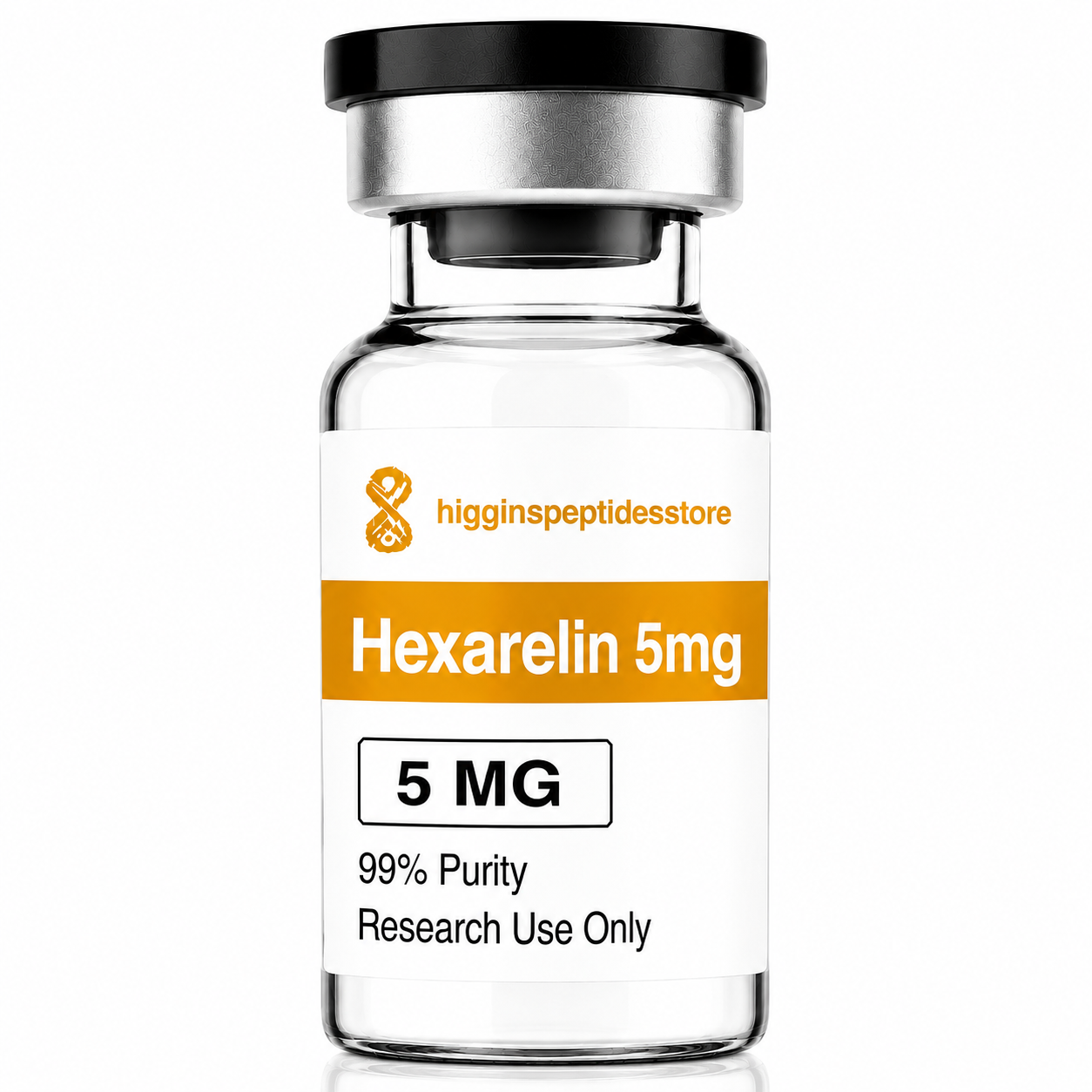


Buy Hexarelin 5mg Online
Buy Hexarelin 5mg Online is a synthetic peptide that has attracted considerable attention within peptide science, endocrinology research, molecular biology, and growth hormone secretagogue investigations. Often referred to as Examorelin, Hexarelin belongs to a class of compounds known as growth hormone secretagogues (GHS), which are widely studied for their interactions with growth hormone signalling pathways and related biological systems.
Researchers continue investigating Hexarelin because of its unique molecular structure, potent receptor activity, and potential relevance to cellular communication pathways. Scientific studies have explored Hexarelin in areas including endocrine regulation, cardiovascular biology, tissue signalling mechanisms, metabolic research, and molecular communication systems. Hexarelin is generally recognised as one of the most potent compounds within the GHRP (Growth Hormone Releasing Peptide) family.
This article provides an educational overview of Hexarelin, its scientific characteristics, research applications, and its role within modern peptide science.
What Is Hexarelin?
Hexarelin is a synthetic hexapeptide originally developed as a growth hormone secretagogue. Structurally, it was designed as an advanced analogue of earlier growth hormone-releasing peptides and demonstrates strong affinity for the Growth Hormone Secretagogue Receptor (GHS-R1a), commonly known as the ghrelin receptor. Research has also identified interactions with the CD36 receptor, which has generated interest in cardiovascular research models.
Scientific investigations describe Hexarelin as a peptide capable of influencing growth hormone signalling pathways through receptor-mediated mechanisms. Because of its potency and stability, it has become a valuable research compound for studying endocrine communication and peptide-mediated biological regulation.
Researchers frequently use Hexarelin in laboratory environments to examine how growth hormone secretagogues interact with signalling networks and physiological communication systems.
The Importance of Growth Hormone Secretagogue Research
Growth hormone secretagogues are a significant area of study in modern peptide science. These compounds help researchers understand how signalling molecules regulate hormone release, cellular communication, and physiological coordination.
Research involving growth hormone secretagogues often focuses on:
- Hormonal communication systems
- Endocrine signalling pathways
- Receptor activation mechanisms
- Cellular coordination networks
- Molecular regulation processes
- Tissue communication pathways
- Metabolic signalling systems
- Biological adaptation mechanisms
Hexarelin remains particularly valuable because it produces strong and measurable receptor activation responses in research settings. Multiple studies have examined its role in growth hormone-related investigations and endocrine communication research.
Mechanism of Action
Scientists have identified the primary target of Hexarelin as the GHS-R1a receptor. Activation of this receptor stimulates signalling pathways involved in growth hormone regulation and peptide-mediated communication.
Research suggests that Hexarelin functions through several mechanisms:
Growth Hormone Secretagogue Receptor Activation
The peptide binds strongly to GHS-R1a receptors, triggering signalling cascades associated with endocrine communication systems. This mechanism is central to many Hexarelin research programs.
CD36 Receptor Interactions
Unlike some related peptides, Hexarelin has also been investigated for its interactions with CD36 receptors. Researchers continue exploring how these interactions may influence biological communication systems beyond endocrine signalling.
Cellular Signalling Pathways
Studies suggest that Hexarelin may influence multiple signalling pathways involved in cellular coordination and physiological regulation. Understanding these pathways remains an active area of scientific investigation.
Research Applications of Hexarelin
Endocrine Research
One of the most common applications of Hexarelin involves endocrine system investigations. Researchers study how growth hormone secretagogues influence communication between endocrine tissues and signalling networks. Clinical and preclinical studies have examined Hexarelin’s effects on growth hormone release mechanisms.
Cardiovascular Research
Scientific interest in Hexarelin extends beyond endocrine studies. Researchers have investigated its interactions with cardiac-related receptors and tissue communication pathways within cardiovascular research models. These studies continue contributing to a broader understanding of peptide-mediated biological regulation.
Metabolic Biology Studies
Researchers frequently explore Hexarelin within metabolic biology investigations. Studies have examined how signalling pathways influenced by growth hormone secretagogues interact with metabolic communication systems and physiological regulation networks.
Molecular Biology Investigations
Hexarelin is commonly incorporated into molecular biology programs focused on receptor interactions, signal transduction pathways, peptide communication mechanisms, and cellular regulation systems. These investigations help scientists better understand biological coordination processes.
Peptide Signalling Research
Modern peptide science increasingly focuses on how signalling molecules coordinate communication throughout biological systems. Hexarelin serves as an important research tool for studying these complex communication networks.
Why Researchers Continue Studying Hexarelin
Interest in Hexarelin remains strong because of several scientific characteristics:
- Potent receptor activation properties
- Extensive research history
- Well-documented pharmacological profile
- Relevance to endocrine investigations
- Applications in molecular biology studies
- Utility in receptor signalling research
- Importance in peptide communication studies
- Broad scientific literature base
These factors have contributed to Hexarelin’s continued prominence within peptide science and endocrine research programs.
Modern Peptide Science and Hexarelin
Peptide science has become one of the fastest-growing areas within biological research. Researchers increasingly recognise that peptides function as critical signalling molecules responsible for coordinating communication between cells, tissues, and physiological systems.
Hexarelin represents an important example of how synthetic peptides can be used to investigate biological communication networks and receptor-mediated signalling mechanisms. Ongoing studies continue to generate valuable insights into endocrine biology, cellular regulation, and molecular coordination systems.
As research technologies advance, scientists gain improved tools for studying peptide interactions and understanding how signalling molecules contribute to biological organisation.
Laboratory Handling and Storage Considerations
Research peptides require proper storage and handling to maintain stability and support reliable experimental outcomes.
Researchers generally follow established laboratory procedures, including:
- Storage in cool, dry conditions
- Protection from excessive heat and light
- Use of sterile laboratory techniques
- Accurate preparation procedures
- Proper documentation practices
- Compliance with institutional laboratory standards
These practices help preserve peptide integrity throughout research programs.
Future Directions in Hexarelin Research
Scientific interest in growth hormone secretagogues continues expanding. Researchers are increasingly focused on understanding how peptide signalling pathways influence biological communication systems and physiological coordination mechanisms.
Future investigations may continue exploring:
- Receptor signalling pathways
- Endocrine communication systems
- Molecular regulation mechanisms
- Cellular adaptation responses
- Cardiovascular signalling research
- Metabolic communication networks
- Peptide structure-function relationships
As knowledge grows, compounds such as Hexarelin are expect to remain valuable tools for advancing scientific understanding of biological systems.
Conclusion
Hexarelin 5mg remains an important research peptide within modern endocrinology, molecular biology, and peptide science. Its potent receptor activity, extensive scientific literature, and relevance to growth hormone secretagogue research have made it a widely studied compound in laboratory environments.
Through ongoing investigations, researchers continue exploring how Hexarelin influences signalling pathways, cellular communication systems, and biological regulation mechanisms. These studies contribute valuable knowledge to the broader fields of peptide science, endocrine research, and molecular biology.
Research Disclaimer
Hexarelin 5mg is intended exclusively for laboratory and scientific research purposes. It is not approved for human consumption, medical treatment, therapeutic use, veterinary applications, or diagnostic purposes. Research should be conducted only by qualified professionals in accordance with applicable regulations, laboratory standards, and safety guidelines.
Be the first to review “Buy Hexarelin 5mg Online”
Related products
Peptides
Peptides

Peptides
Peptides
Peptides

Peptides

Peptides
Reviews
There are no reviews yet.